
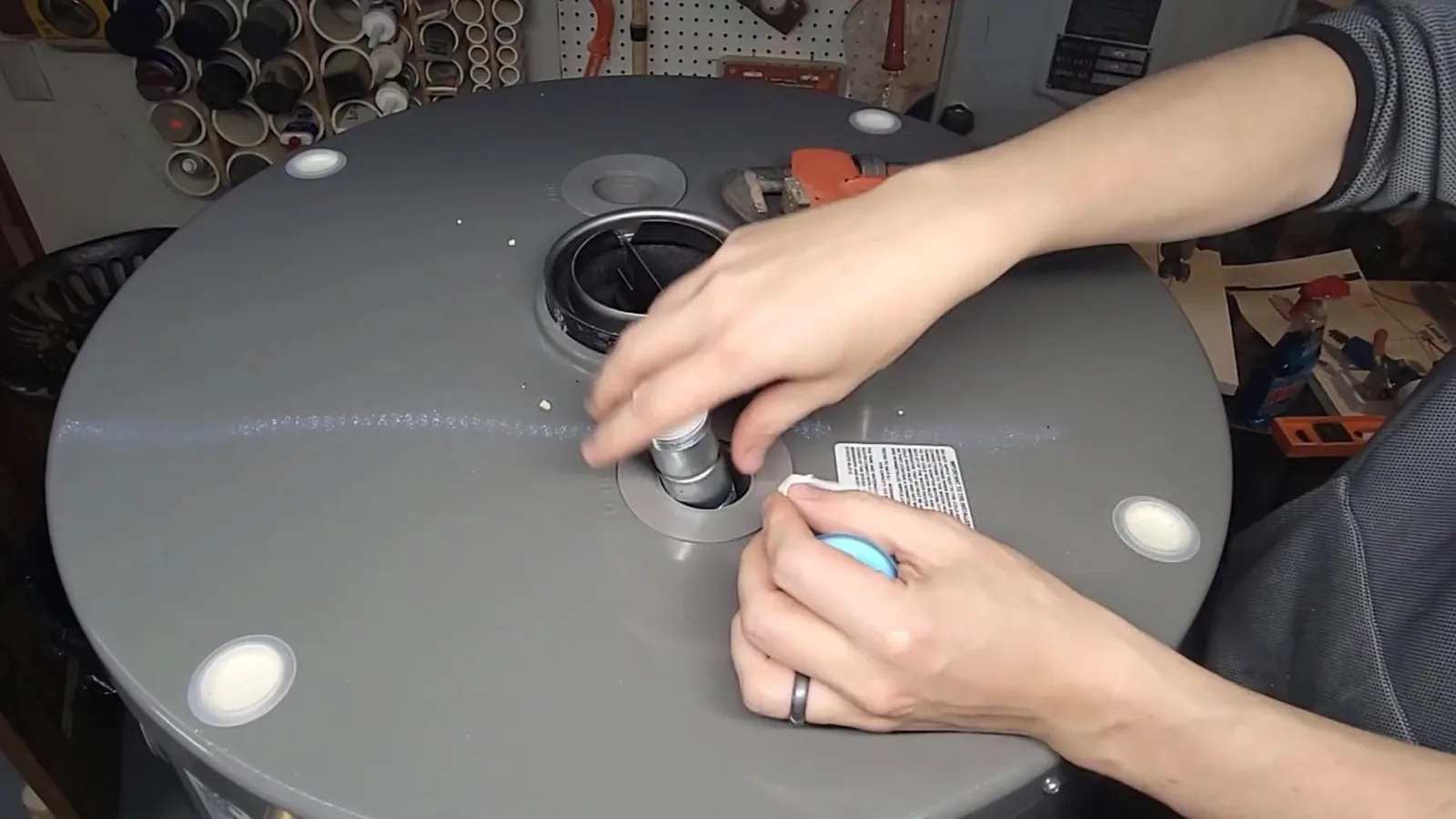
Replace now or repair: settle that first
A replacement only makes sense when the tank itself has failed or is not worth another repair. Water leaking from the shell, a tank that has rusted through or a unit that has needed several repairs in a short time point toward replacement. A failed element, thermostat or valve usually points toward repair, which the water heater repair page explains.
Ask the plumber to show you what failed and to say whether a repair would hold. The data plate on the tank shows the manufacture date, which tells you how old it is. A heater at the end of its life that fails on a weekend is a replacement on short notice, which is why a planned swap tends to go better.
Gas or electric: usually what the house already has
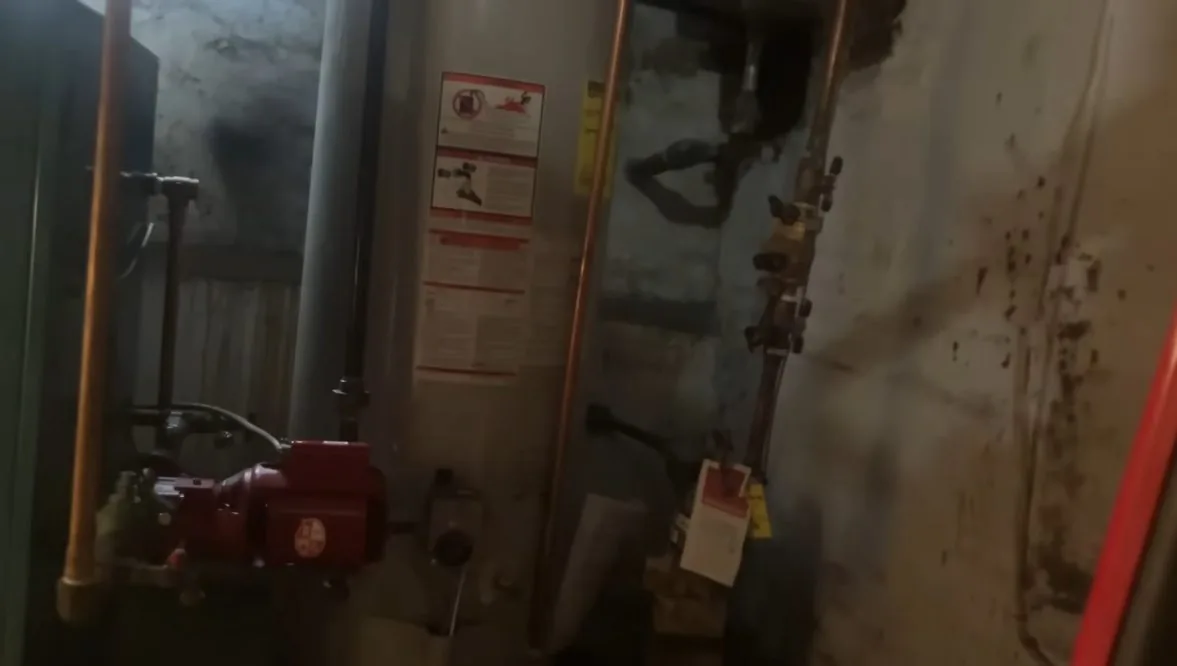
Most replacements keep the same fuel, because the gas line, the vent or the electrical circuit is already there. Switching fuel is possible but adds work: a new gas line and vent for a conversion to gas, or a high-capacity circuit for a conversion to electric. Ask for both prices if you are thinking of switching.
| Choice | What it needs | What to ask |
|---|---|---|
| Gas tank heater | Gas line, shutoff, proper venting for exhaust | Is the existing vent still sound and the right size |
| Electric tank heater | A dedicated circuit and a breaker of the right rating | Does the panel have room and capacity |
| Heat pump (hybrid) tank | Electric supply, space for air flow and a condensate drain | Where the unit sits and what happens to the room's air |
| Tankless | Larger gas line or electric load, venting | See tankless water heater options |
Sizing a replacement heater to the household's peak hot water use
Size follows how many people use hot water and when. A household with two people showering in the morning needs less than a household with a teenager, a soaking tub and a dishwasher running together. Ask the plumber to size the heater to the household's peak use and not to match the old tank without checking.
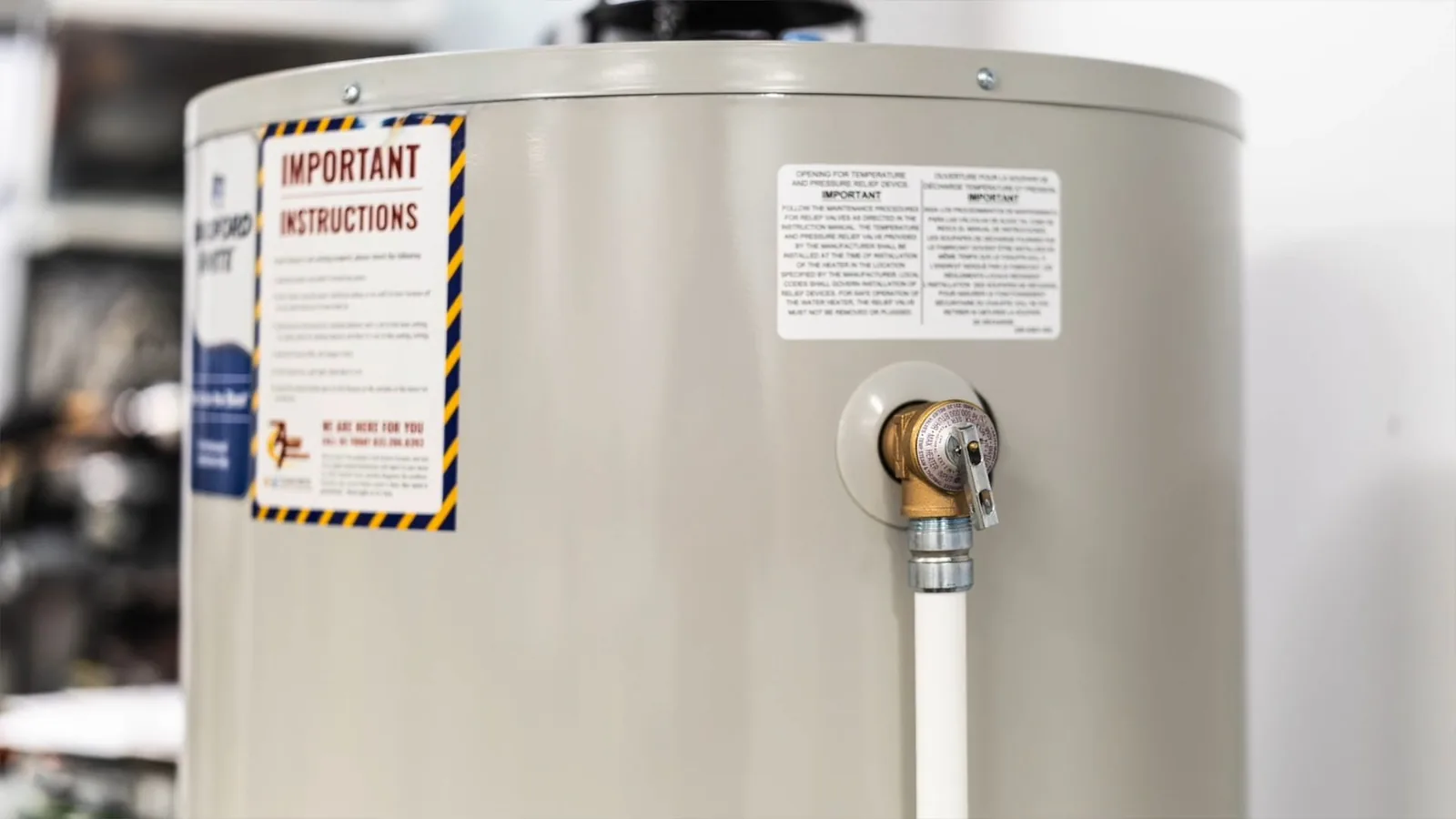
The median home here was built in 1991, so the heater is often in a garage or utility closet built around the old tank. A newer unit may be taller, wider or need more clearance. Measure the space and tell the dispatcher what is there. Manufactured homes, about 29 percent of the housing here, often use units designed for tight enclosures.
Replacing a heater is also the moment to renew the small parts around it. Flexible connectors, shutoff valves, the relief valve discharge pipe and the drain pan all age with the tank. Ask the plumber to look at each one and tell you what they would replace and why. Reusing a corroded part on a new heater defeats part of the point.
Venting, valves and the code items a new heater brings
- Venting. A gas heater must exhaust combustion gases safely. The vent has to be the right size, sloped correctly and in good condition.
- Relief valve and discharge pipe. A safety device that must be installed and piped to a safe location, not capped.
- Expansion control. Where the plumbing is a closed system, a small expansion tank may be needed to absorb pressure from heated water.
- Drain pan. Where a leak would damage a finished space, a pan with a drain limits the harm.
- Shutoff valves. A working cold supply valve and, for gas, an accessible gas shutoff.
These are the places where a quick job and a correct job differ. Ask which of them the plumber plans to install or replace, and why. If the job touches gas piping, how gas piping work is handled explains the permit and the safety steps that go with it.
Permit and inspection for a new water heater
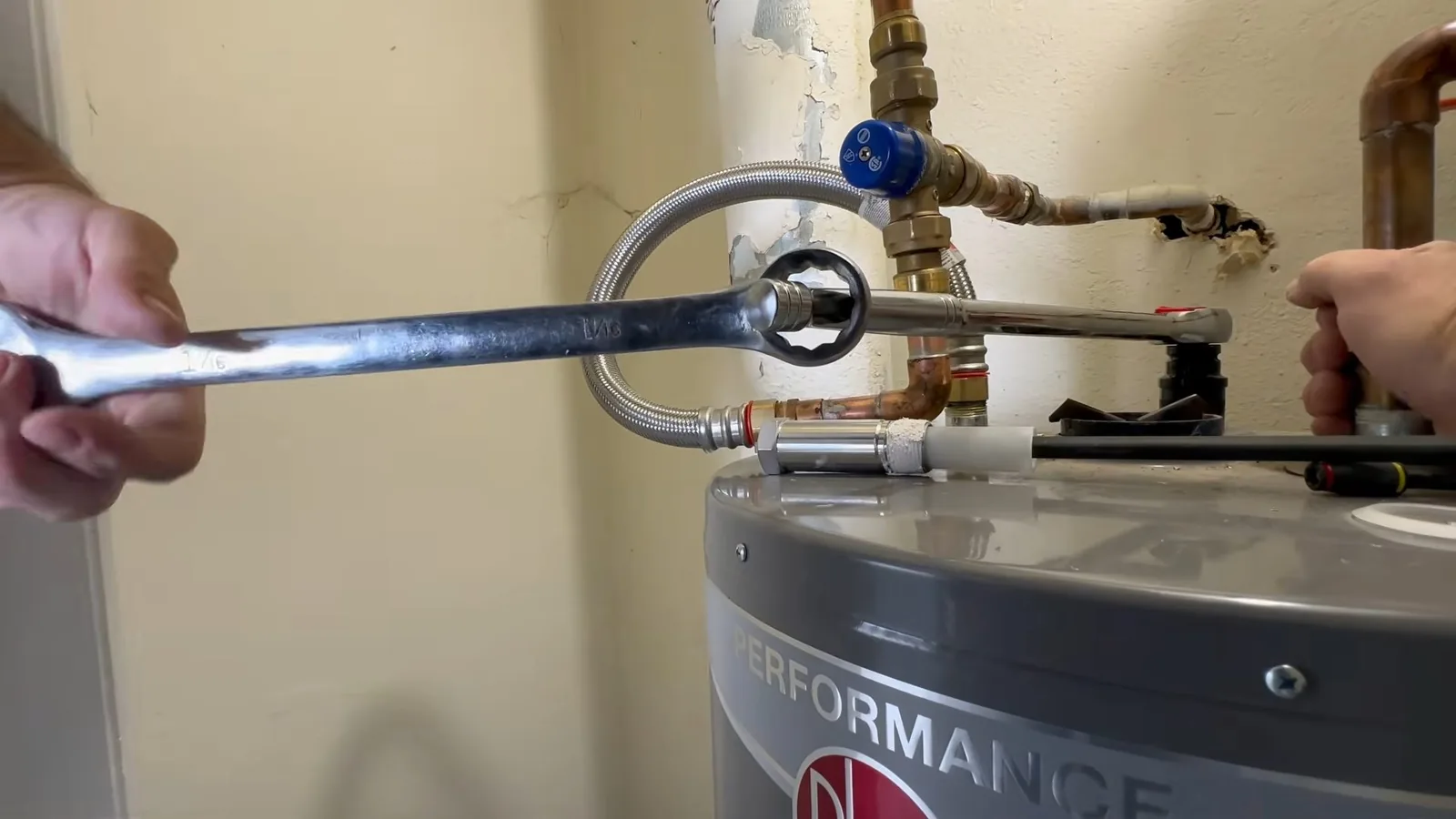
Water heaters and gas piping are not on the city's list of work exempt from permits, and the city says to assume a permit is required for any item not on that list. Bullhead City uses the 2018 International Plumbing Code and the 2018 International Fuel Gas Code. Ask who pulls the permit and when the inspection happens.
The Building Division at (928) 763-0124 can confirm what applies to your job. A permitted installation leaves a record that the unit was checked, which matters if you sell the home or make a claim. If a plumber says no permit is needed for a replacement, ask them to explain on what basis, and then check with the city.
The choice of treatment before the new heater goes in
Water quality shortens or lengthens the life of a heater, and Bullhead City's water comes from groundwater wells. The utility's published reports list sodium but not hardness, so you do not know your hardness from them. Call the utility at (928) 763-9400 to ask for the figure for your address before deciding on a water softener.
Water heater installation questions
How long does a replacement take?
A straightforward like-for-like swap is often a half day of work, but venting changes, a fuel switch or code upgrades add time. Ask the plumber for the scope and the expected length before the visit, and plan for the water to be off while the unit is changed.
Should I replace the heater before it fails?
If the unit is old and showing signs, such as rust, rumbling or repeated repairs, a planned replacement avoids a failure at a bad moment. It also lets you choose a unit and a time, rather than taking whatever is available in an emergency.
Will my old heater be hauled away?
Ask this when you book. Removal and disposal of the old unit is a normal part of a replacement, but it should be stated in the scope of work in plain words, so there are no surprises on the day and no old tank left in your garage.