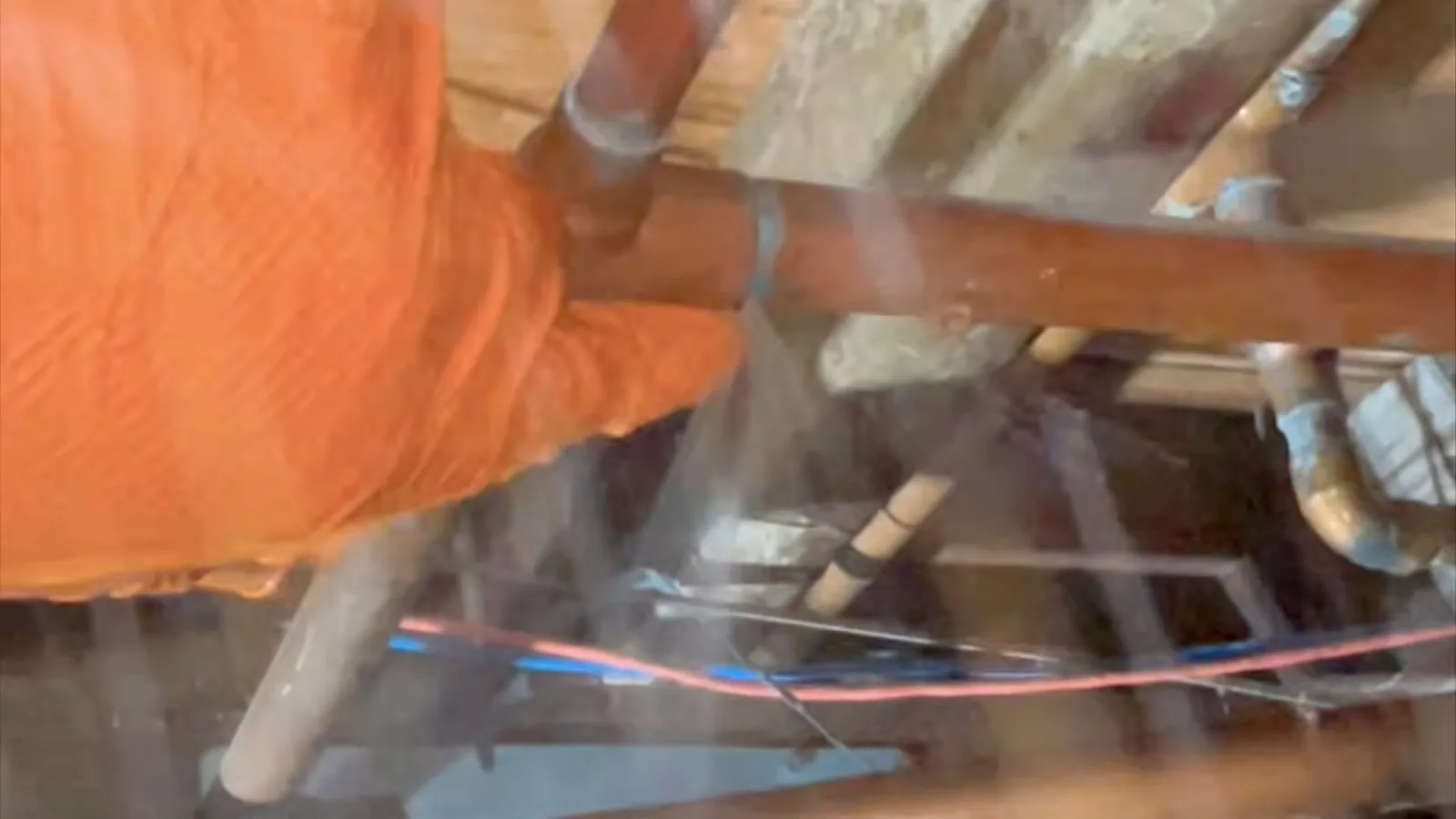
Shut the main, open a low faucet and keep electricity away
- Shut off the water at the main valve. It is usually where the water line enters the house or beside the meter. Turn it all the way closed. If you cannot find it or it will not turn, say so when you call.
- Open a low faucet. A tub faucet or an outdoor hose bib lets the lines drain and takes pressure off the break. Leave it open until a plumber tells you otherwise.
- Keep water and electricity apart. Do not touch outlets, appliances or the panel while standing in water. If the panel is dry and you can reach it without crossing a wet floor, turning off the breaker for the affected area is reasonable. If not, leave it and call.
- Take photos and move what you can. Pictures of the water and the damage help when you describe the problem to the plumber and in any later conversation about the loss. Lift rugs, boxes and electronics off the wet floor.
If any part of this involves the smell of gas, stop reading and leave the house. Do not switch lights on or off, and do not use a phone indoors. Gas is a different call, with different people to reach first, and it is covered under gas leak and gas line guidance.
What counts as an emergency and what can wait
Not every plumbing problem needs a rush call, and treating every drip as an emergency makes it harder to tell the real ones apart. People also wait too long on the ones that matter. The table sorts the common cases by what you can see, so you can decide in a minute.
| What you see | Emergency? | Why |
|---|---|---|
| Water that will not stop, or a burst pipe | Yes | Damage grows with every minute the water runs |
| Sewage coming up in a tub, shower, toilet or floor drain | Yes | Contaminated water, and the line may be blocked downstream |
| Water coming through a ceiling or a light fixture | Yes | Water and wiring are in the same space |
| No hot water | Urgent, usually not an emergency | Check the safe steps on the water heater repair page first |
| One slow drain, a dripping faucet or a running toilet | Can wait for a scheduled visit | Close the fixture's own shutoff valve if it is wasting water |
| A smell of gas | Not a plumber's call first | Leave, call 911 and the gas utility |
Who to call first: the utility, the gas company or a plumber
Where the problem sits decides who can fix it, and the wrong first call costs time. Bullhead City Utilities lists leaks and line breaks on its service line, (928) 763-0166, and after-hours dispatch at (928) 763-1999. Water coming out of the ground by the meter, or running in the street, belongs there.
Gas belongs to Southwest Gas, (928) 763-7467 on the city's list of outside agencies. Anything inside the property line, such as a split pipe in a wall, a failed water heater or a backed-up fixture, is where a plumber comes in, and the dispatch line on this site routes that call.
Sewage is the case people get wrong. The city runs the sewer and has replaced septic systems in several areas, including Arroyo Vista, Buena Vista, Tierra Grande, Desert Glen, Lake Mohave Highlands and Sunridge. If you are not sure whether your street is on city sewer or septic, Bullhead City Utilities can tell you at (928) 763-9400, and Mohave County Environmental Health is the city's listed contact for septic.
What to tell the dispatcher so the right plumber is sent
A clear first minute on the phone saves a second call. You do not need plumbing words, just a plain description of what the house is doing. These are the details that the dispatcher and the plumber use to decide what to bring and how to prepare for the job.
- What is wet and where. Kitchen, bathroom, ceiling, yard, or around the water heater.
- Whether the main is off and whether the water has stopped.
- Whether the meter still moves with every fixture and appliance off.
- What kind of home it is. A manufactured home, a slab house and a home with a crawl space have different pipe layouts, and about 29 percent of homes here are mobile homes (ACS 2019 to 2023).
- Roughly how old the home is. The median home was built in 1991, so the pipe, heater and fixtures may be older than you think.
- Your ZIP code. The dispatch network lists 86429, 86430, 86439 and 86442, and the dispatcher confirms your address on the call.
Availability and response times vary with demand and conditions. This page cannot promise an arrival time, and nobody on the call should promise one you cannot hold them to. Ask what is realistic for your address, and keep the water off and your phone nearby so the plumber can reach you if the plan changes.
Burst pipes, sewage backups and floods: what each one needs
A burst or split pipe
Once the main is off, the plumber's job is to find the break, cut out the damaged section and replace it. A hard freeze is rare here, about two nights a year below 32 degrees (NOAA 1991 to 2020 normals), so do not assume the cause. A fitting, a connector or an aging pipe can fail on a warm day. The burst and broken pipe repair page covers what the plumber checks.
A sewage backup
Stop running water into the house. Every flush, shower and washing machine cycle sends more into a line that is already blocked. If more than one fixture is affected, the blockage is probably in the main line and not at a single drain. Read about sewer line repair and replacement, and for a single stubborn fixture see clearing a clogged drain.
Water in the house with no obvious source
Damp drywall, a warm spot on a floor or a meter that keeps moving points to a hidden leak. Finding it without opening walls is the job of water leak detection. Before anyone digs in the yard to reach a buried line, an Arizona 811 ticket is required, at least two working days ahead (ten for apartment communities and mobile home parks), and the plumber should confirm it.
A flooded space after the water is stopped
Stopping the water and drying the space are separate jobs, and they are often done by different people. Water damage removal and drying covers extraction and drying. Rebuilding walls and floors afterward is construction work and is not part of what this site arranges, so plan on a separate contractor for that.
Plumbing repair, maintenance and work that is not an emergency
Most plumbing calls are not emergencies. A heater that is ten years old, a fixture that has started to drip and a drain that runs slowly are all better handled on a calm day, with a plumber who has time to explain the options. The dispatch line takes these calls too.
Maintenance is the most reliable way to avoid the emergency. After summer, look over outdoor hose bibs and any exposed lines, since July highs average about 111 degrees (NOAA normals). Check under sinks for dampness, and know where your main valve is before you need it.
Repair, installation and replacement each have their own permit rules. The city's list of work exempt from permits covers stopping leaks, clearing stoppages and repairing leaks in pipes, valves and fixtures. Replacing concealed pipe with new material counts as new work. Ask the plumber whether a permit applies and who pulls it. The Building Division is at (928) 763-0124.
Plumbing in a basement, attic or around a dishwasher hookup, and plumbing that runs with a bathroom or kitchen remodel, are planned jobs. Say what you need on the call and the dispatcher will tell you whether a plumber can take it. This site is set up for homes. If your job is commercial or new construction, including an accessory dwelling, say so up front so the call goes to a plumber who does that work.
Questions about emergency calls
Can someone come tonight?
That depends on demand and conditions at the time you call, and nobody can honestly promise a time in advance. The dispatcher can tell you what is available for your address. Shut off the water first so the situation stops getting worse while you wait, and keep your phone close.
Should I shut off the main if only one fixture is leaking?
If the fixture has its own shutoff valve, such as the one under a sink or behind a toilet, close that first, since it stops the leak without taking the whole house offline. If the valve will not hold, drips when turned or the leak is inside a wall, close the main valve instead.
How do I know whether the water problem is the city's or mine?
Water coming out of the ground by the meter or in the street is the utility's. Water inside the property line is generally the plumber's. If you cannot tell, call Bullhead City Utilities at (928) 763-0166 and describe what you see.