
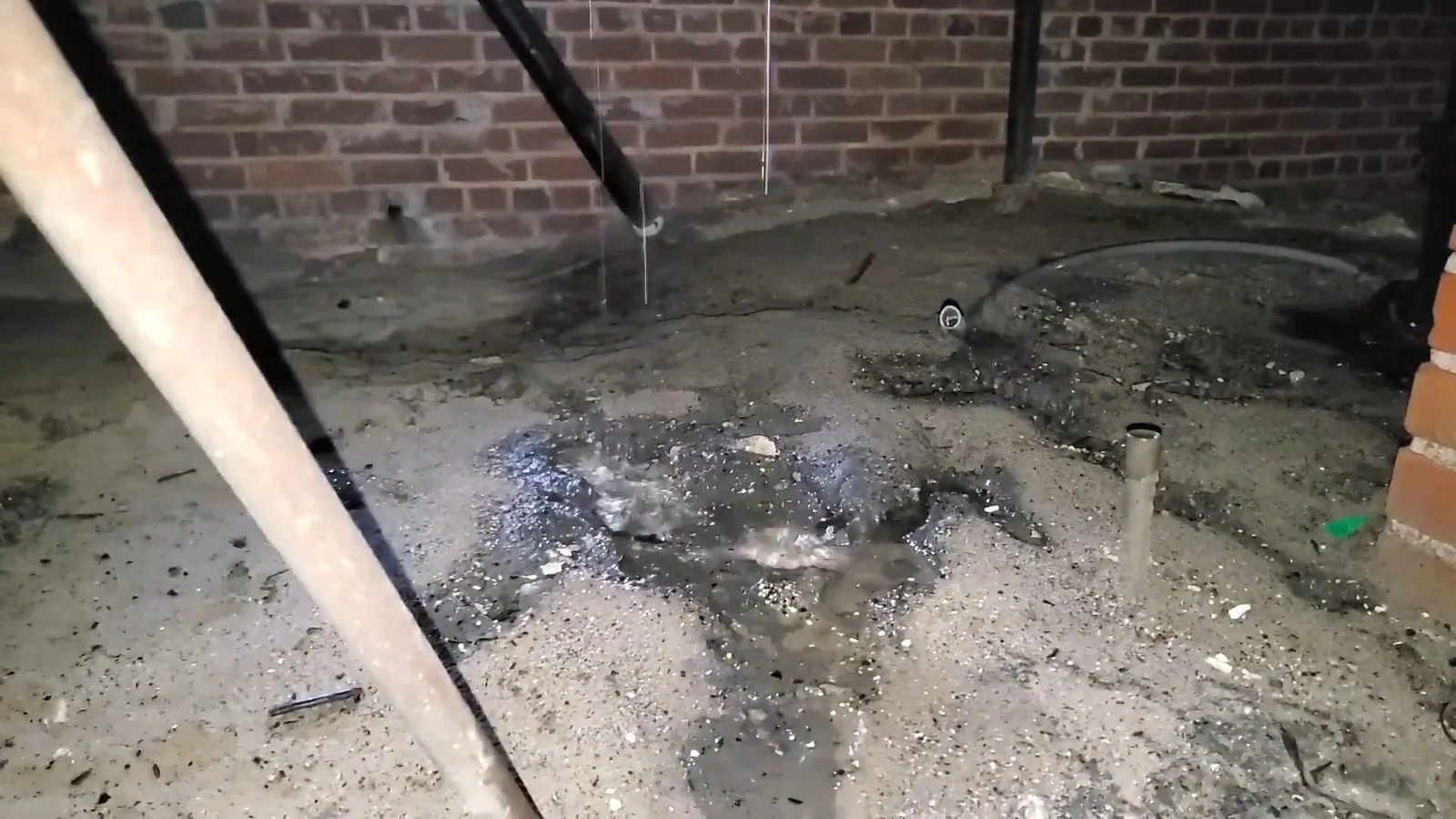
The meter test: is water leaking right now
- Turn everything off. Stop the dishwasher, washer, ice maker and irrigation, and make sure no one is using water.
- Find the meter in the ground box near the street or driveway and lift the lid with care.
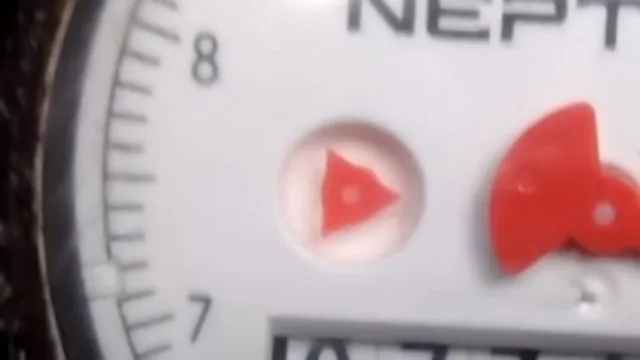
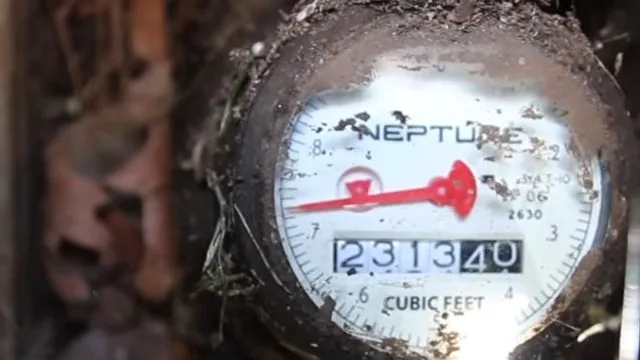
- Read the leak indicator. Many meters have a small dial or triangle that spins when any water moves. If it turns with everything off, water is going somewhere.
- Wait fifteen minutes and look again. Note any movement. Then close the main valve at the house and check the meter once more.
If the indicator keeps moving after the house main is closed, the leak is between the meter and the house, in the yard. If it stops when the main is closed, the leak is inside the house or in a fixture. That one result narrows the search before anyone arrives.
Signs of a hidden leak that are easy to miss
- A water bill that rises without a change in how the household uses water.
- The sound of running water when everything is off.
- A warm spot on a floor, or carpet that feels damp.
- Paint that bubbles or drywall that stains, softens or smells musty.
- A section of yard that stays wet, greener or sunken while the rest is dry.
- Low water pressure that has crept down over weeks.
Leaks inside walls and under floors do their damage slowly. Drywall softens, mold finds moisture and wood fastened near a leak loses strength. A small leak found early costs little. The same leak found after a year is a repair plus a restoration job, which is why a bill that jumps deserves a look and not a shrug.
The city's side of the meter and yours
Bullhead City Utilities lists leaks and line breaks on its service line, (928) 763-0166. Water running from the ground at or before the meter is generally the utility's to deal with. The pipe from the meter to the house is on the property side, and the city's pages do not spell out every case, so call (928) 763-9400 and ask where the utility's responsibility ends for your address.
That call is worth making before paying for yard work. A plumber can confirm that the leak is on your side, find it and recommend a repair, and the utility can confirm what it will and will not cover. The two together keep you from paying to dig up a line that is not yours.
How plumbers find leaks without tearing things open
Listening, tracing and pressure tests
Acoustic equipment picks up the sound of escaping water through floors and walls, and pressure tests show whether a line holds. A moisture meter reads dampness in drywall and flooring, and a thermal camera can show temperature differences, such as a warm line under a floor. No single tool finds every leak, so plumbers combine them.
Isolation and elimination
Plumbers also close off sections of pipe one at a time and watch the meter. This narrows a leak to a branch, a wall or a length of yard line before any tool is used. It is slow, and it works on leaks that sound and heat cannot find. It is common to use both in the same visit.
Walls, ceilings, yards and under the floor
Behind a wall or above a ceiling, the usual suspects are a supply line, a drain connection or a shower valve. In a yard, a pipe from the meter to the house or an irrigation line is likely. Under a concrete floor, you have what the next page covers in depth: leaks beneath the slab.
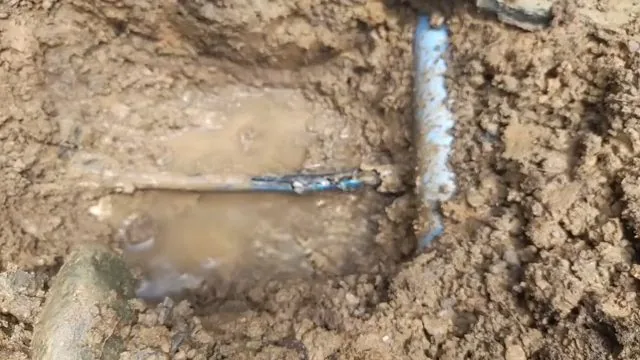
Before anyone digs to reach a buried line, an Arizona 811 ticket is required, at least two working days ahead (ten for apartment communities and mobile home parks). The plumber should confirm it. Homes here run from 1980s slab houses to mobile homes, about 29 percent by the Census survey, and the way lines run beneath each is different.
Detection finds the leak. A separate step repairs it. A pinpointed leak in an accessible pipe is a burst or broken pipe repair job. A leak found in a fixture is a repair at that fixture. Repairing leaks in pipes, valves and fixtures is on the city's permit-exempt list, while replacing concealed pipe is not, so ask which applies.
Gas leaks, roof leaks and pools: who to call instead
Gas leaks are a different emergency. If you smell gas, leave the house and call 911 and Southwest Gas at (928) 763-7467. Roof and gutter leaks are building work, not plumbing. Pools and irrigation systems have their own leak patterns, and whether the plumber who answers can handle them is a question for the dispatcher. Ask before assuming.
Leak detection questions
Can a leak be found without breaking the wall?
Often, yes. Listening equipment, moisture meters, thermal cameras and pressure testing narrow a leak to a small area before any opening is made. Some leaks still need a small access hole to confirm and repair, but it should be the size the job requires and no larger.
Will my bill go down after the leak is fixed?
If the leak was running continuously, your use should drop to its normal level on the next reading. Compare two bills and not just one, since billing periods and seasonal use, such as summer irrigation, change the total from month to month.
Is a running toilet a leak?
It can be a large one. A toilet that fills on its own wastes water every hour, and it is one of the most common causes of a surprising bill. A worn flapper or fill valve is usually the cause and a simple repair.