
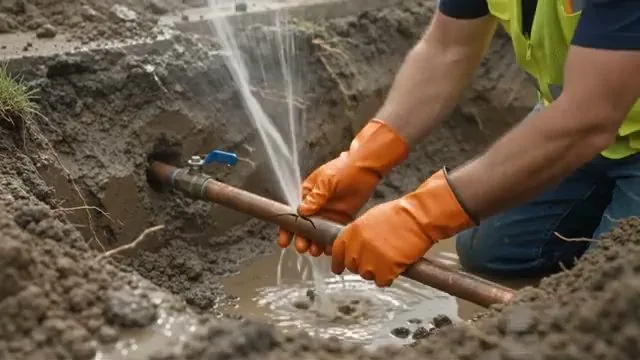
Which valve stops the water
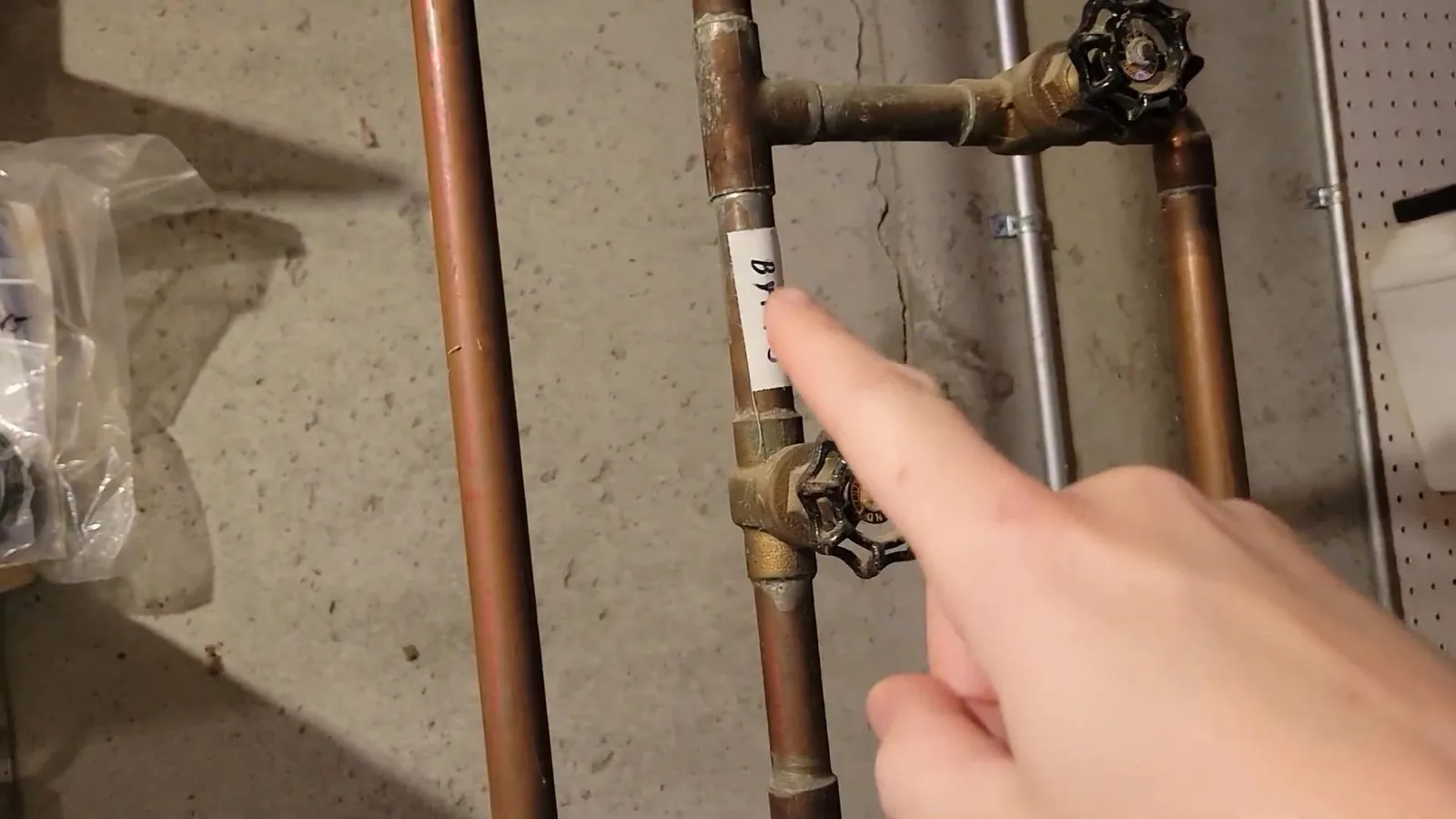
Three valves can stop a burst, and picking the closest one limits how much of the house goes without water. A fixture shutoff handles a failed supply line at a sink or toilet. The main valve, usually where the line enters the house, stops everything inside. The utility's meter valve is a last resort that the city expects you to leave to its staff.
If water is coming out of the ground by the meter or running in the street, that is the utility's side, and Bullhead City Utilities takes leak and line break calls at (928) 763-0166, with after-hours dispatch at (928) 763-1999. Water inside the property line is where a plumber comes in, and the dispatch line on this site routes that call.
Why pipes burst here when it almost never freezes
Freezing is the textbook cause, but Bullhead City logs only about two nights a year below 32 degrees (NOAA 1991 to 2020 normals). A frozen pipe is possible in a cold snap, especially on an exposed outdoor line or in an unheated space. It is not the usual story in this town, so do not assume it when the weather has been warm.
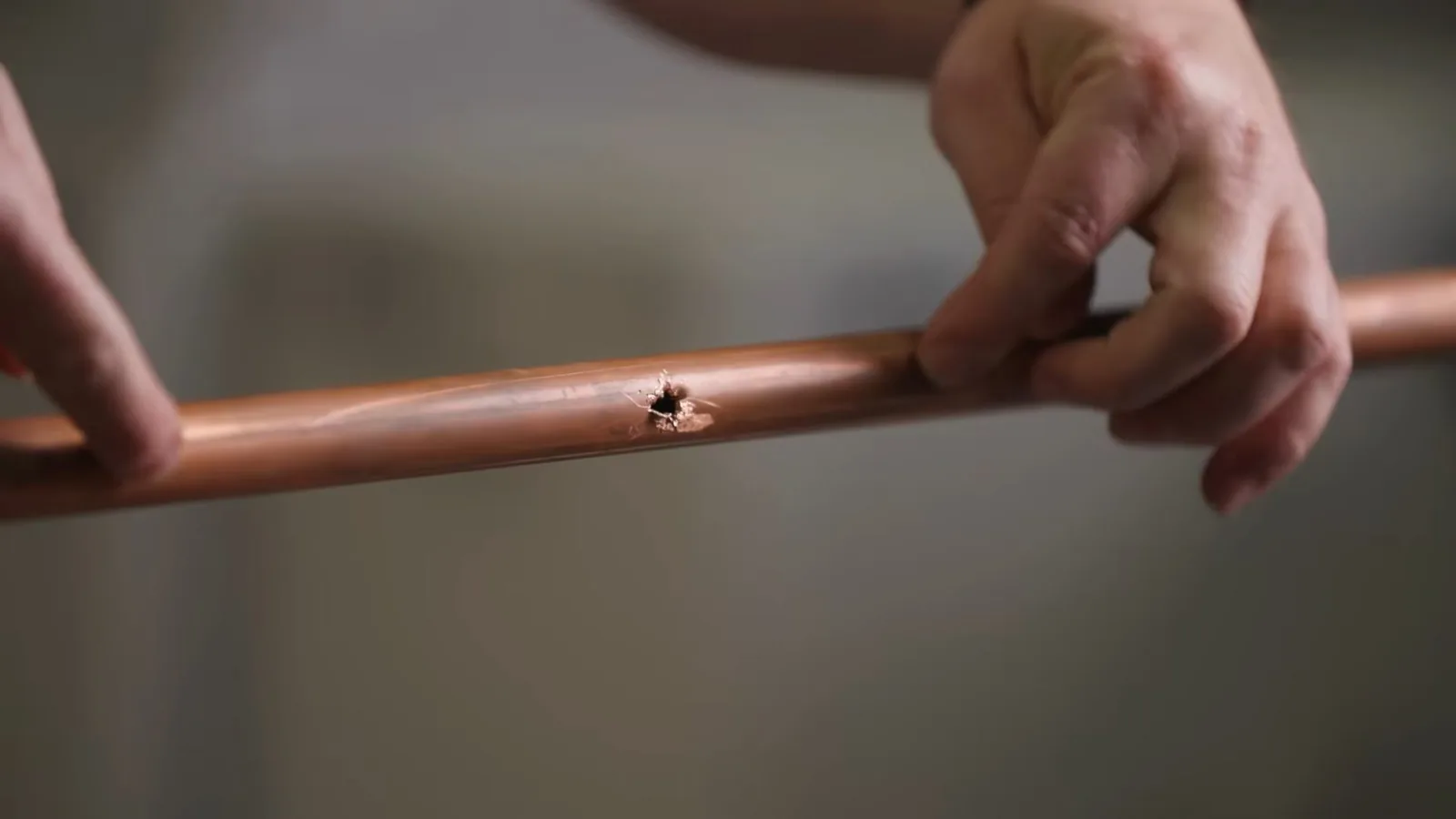
More often the pipe has simply worn out or been stressed. July highs average about 111 degrees, so lines in attics, exterior walls and sun-baked yards expand and contract hard. Pressure that runs high, a fitting that has corroded and pipe that is decades old all fail without warning. The median home here was built in 1991, so much of the plumbing is past thirty years old.
| What you see | Likely cause | What the plumber checks |
|---|---|---|
| Spray or a steady stream from a wall | Split pipe or failed fitting | Isolate the section, find the split and the cause |
| Water at the ceiling, no sound of spray | Slow failure in an attic or upper wall | Trace from the stain back to the source |
| Wet yard patch, a hissing sound or a spinning meter | Buried line break | Locate the line and check 811 markings before any digging |
| Repeated pinholes in different places | Pipe wearing out across the house | Whether repair or whole-house repiping is the sounder path |
What a repair actually involves
Once the water is off, the plumber finds the failure, cuts out the damaged section and joins in new pipe with fittings that suit the material. For a short break on accessible pipe that is an hour or two of work. If the pipe runs behind drywall, the wall may need a small opening, and the plumber should tell you where before cutting.
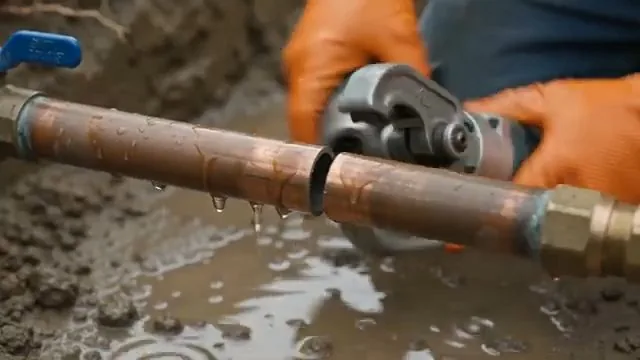
A failed section is sometimes a sign that the rest of the run is no better. Ask the plumber to look at the pipe on either side of the break and at nearby fittings, and to tell you plainly what condition they are in. A repair is reasonable when the rest of the line is sound. When it is not, you are choosing between more repairs later or replacing the run now.
Permits follow the work. The city's permit-exempt list covers stopping leaks and repairing leaks in pipes, valves and fixtures, so a straightforward repair of the burst section does not generally need one. Replacing concealed pipe with new material counts as new work and does. Ask the plumber which applies, and the Building Division at (928) 763-0124 can confirm.
After the water is stopped: damage, photos and the next call
- Photograph everything before you move or clean anything, including the broken pipe if it is accessible.
- Lift what you can off wet floors, and open doors and cabinets to start air moving.
- Do not use a ceiling fixture that is holding water, and keep the circuit off until it is checked.
- Ask the plumber to keep the failed section if you may make an insurance claim.
Drying is separate from repair. Water that has soaked into drywall, insulation and flooring does not go away on its own, and damp materials can grow mold. Water damage removal and drying explains extraction and drying. Rebuilding the wall or floor afterward is a construction job, not something this site arranges.
Hidden, under-slab and outdoor breaks need a different approach
A visible burst is the easy case. Water that appears in a wall, in a yard or on a floor with no obvious source calls for finding the leak first, and pinpointing a hidden leak covers how that is done without tearing out finished surfaces. Leaks under a concrete floor are a different job, handled on the page about slab leaks.
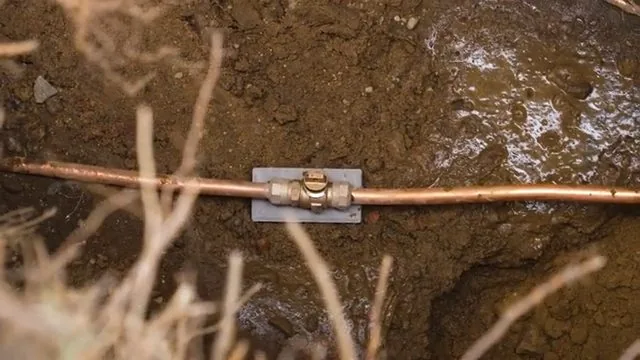
If the break is outdoors, an Arizona 811 ticket is required before anyone digs, at least two working days ahead (ten for apartment communities and mobile home parks). The plumber should confirm it. Many of the homes here are manufactured housing, about 29 percent by the latest Census survey, and their lines often run under the home in a different arrangement than a slab house. Say what type of home you have when you call.
Commercial burst pipes are a separate kind of job. This site is set up for homes, so if the building is a business, say so at the start of the call and the dispatcher will tell you whether a plumber can take it. Do not assume one can, and do not delay shutting the water off while you find out.
Burst pipe questions
Is a burst pipe covered by homeowners insurance?
That depends on your policy and on the cause of the loss, and this site cannot say. Many policies treat sudden water damage differently from long-term leaks. Take photos, keep the failed section and call your insurer early to ask what they need from you.
Can I fix a burst pipe myself?
A temporary clamp or push-fit coupling can hold a small split while you wait, and some homeowners are comfortable with them. A lasting repair depends on the pipe material, the fittings and often a permit question, so a plumber is the safer choice for anything inside a wall.
How do I know the pipe is really fixed?
Turn the water back on slowly, check the repair and the new joints, and watch them for several minutes. Then leave every fixture off and look at the meter. If it still moves with everything off, water is escaping somewhere else and the plumber should come back.